
Water First: Wells, Rain Catchment, and Springs Compared


Photo by Achor David
An 85-foot well in Iowa had given a farm family good water for years. Then drought came, the water table dropped, and the well started drawing from deeper down: hardness up to 50 grains, iron bacteria turning the water red, rust flakes plugging the little screens in the faucets, and hot water that smelled of rotten eggs from sulfur bacteria in the water heater. The fix took 12 gallons of bleach shocked through the whole system over two days, and filters that kept plugging afterwards.
Nothing about the well changed. The water underneath it did. That is the first thing to understand about choosing a water source: you are not buying a fixture, you are marrying whatever the land does in its driest month of its driest year. Wells, rain catchment, and springs are the three usual choices. Here they are compared the way the decision actually arrives: at their worst, not their best. Prices are rough US dollars, gathered in November 2026.
The drilled well: the standard answer, with a dry-hole clause
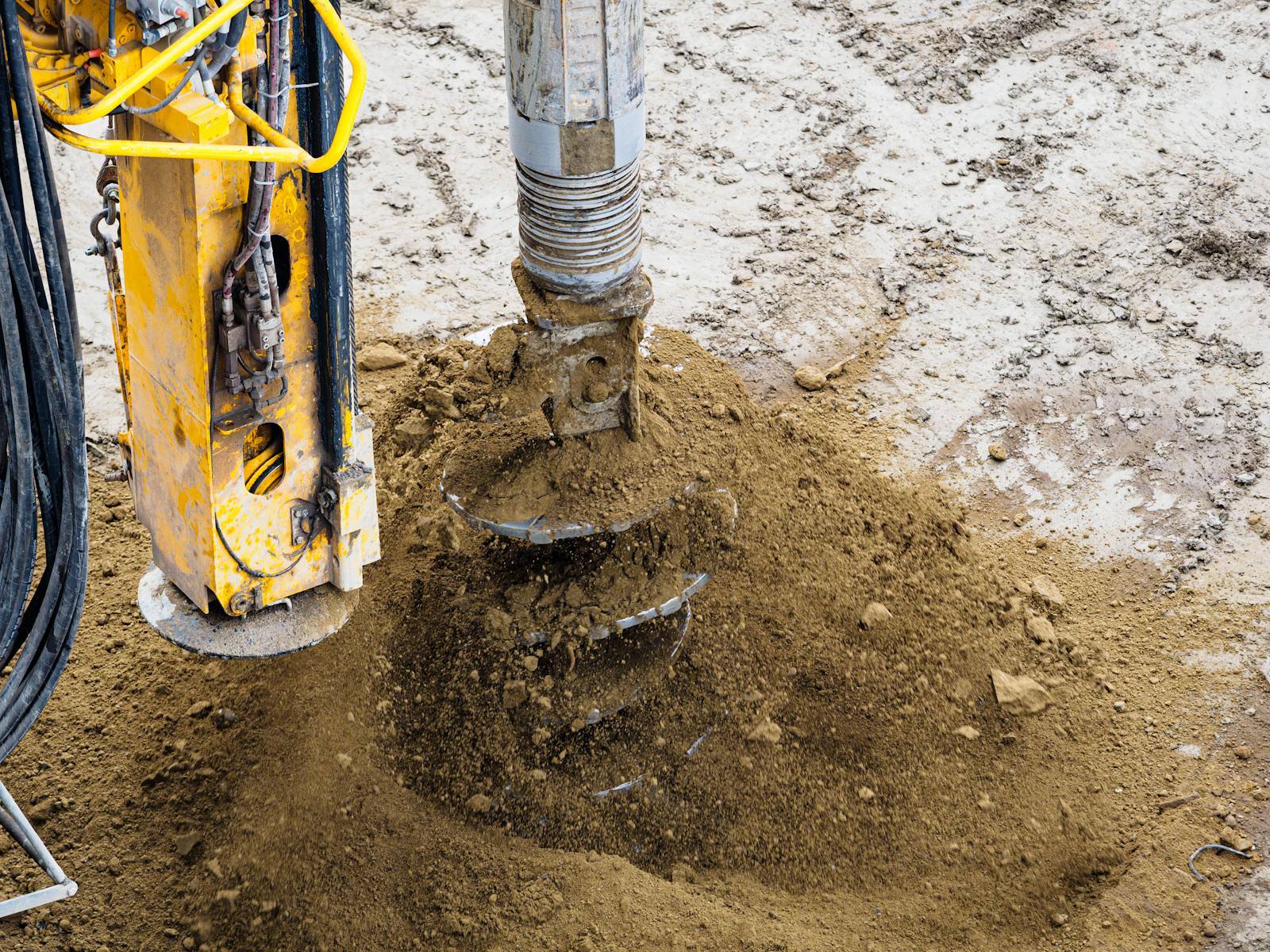
A drilled well is the choice most off-grid homes end up with, because it is the only one of the three that works almost anywhere and in almost any month. Drilling alone runs about $15 to $25 a foot in the US; a complete system — drilling, casing, pump, pressure tank, wiring — runs $25 to $65 a foot, and most homes land between 100 and 500 feet deep, with the national median around 140 feet. Totals of $6,000 to $25,000 cover most of the country, and deep or hard-rock country goes past $30,000. In Ontario, drilling runs $45 to $115 a foot and finished wells commonly land between $9,000 and $24,000.
The clause nobody reads aloud: drilling contracts sell drilling, not water. If the hole comes up dry, it still bills in full, and a second hole is a second full bill. Records from Bowen Island, British Columbia, count 33 dry wells out of 486 registered — 29 of them with a producing well within 200 metres. A neighbour's good well is evidence about the area. It is never a promise about your hole, and any driller who guarantees water is a warning sign, not a comfort.
On yield, the comfort line is 5 to 6 gallons a minute, which meets a home's peak demand with no storage at all. But yield and storage are substitutes. One gallon a minute, running around the clock, is 1,440 gallons a day, far more than a house uses; what a slow well cannot do is serve the morning rush all at once. New York's health department guidance pairs wells of 1 to 3 gallons a minute with 150 to 300 gallons of supplemental storage and calls that workable, and a standard 6-inch casing stores about 1.47 gallons per foot of water column — roughly 150 gallons standing in a 100-foot column that most owners never think to count. A slow well plus a big tank often beats an expensive hunt for a faster one.
The last well fact is the one the Iowa family learned: a private well is unregulated. No authority tests it for you. The owner's schedule, per CDC and EPA guidance, is a test at least once a year for coliform bacteria, nitrate, dissolved solids, and pH at a certified lab, a broader panel every three to five years, and a fresh test after flooding, after any repair, and whenever the taste, colour, or smell changes. Drought changes well chemistry. A well tested once, on drilling day, is a well you know less about every year.
Rain catchment: free water, priced in storage
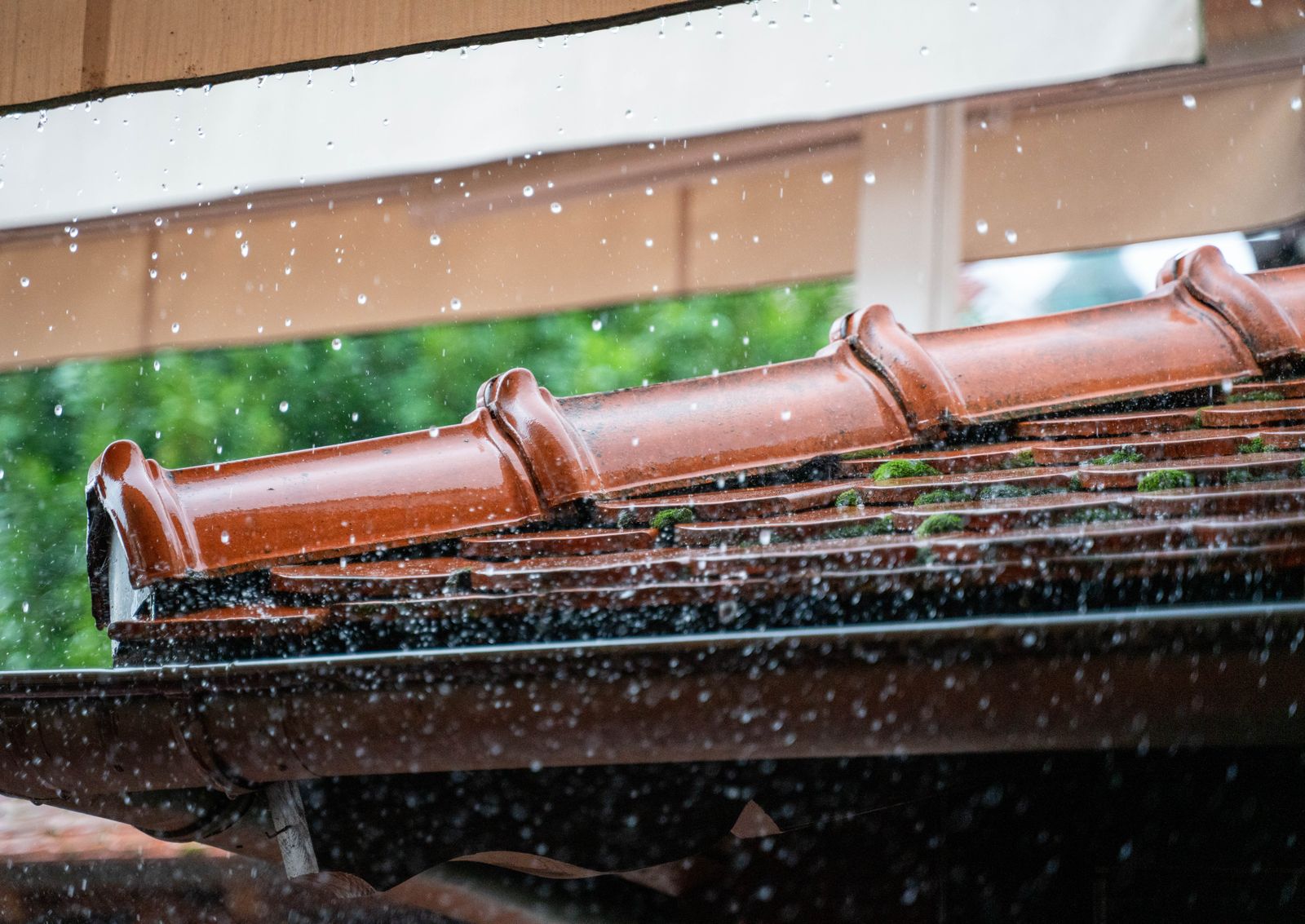
Rain is the only water that falls on your own roof, and the math is friendly at first glance. One inch of rain on 1,000 square feet of roof yields about 600 gallons — 623 before losses. A 1,800-square-foot roof under 38 inches of annual rain averages about 93 gallons a day across the year.

Then the seasons get their say. Real systems collect 50 to 80 percent of the theoretical figure, and neglected gutters drop that to 50 or 60 percent. Worse, the average hides the drought: a place with 50 inches a year may get only two or three inches across its driest summer months, exactly when the garden is thirstiest. Catchment is sized on the driest month or it is not sized at all, and what carries a household through that month is tank volume. The tank itself is the cheap part: about $1,500 buys a 1,500-gallon above-ground poly tank. A whole-house drinking-water system around it — pump, roof washer, filtration, disinfection — runs several times that, and full potable systems commonly land between $8,000 and $20,000.
Two catchment decisions matter more than tank size. The first is the roof. Factory-coated metal, standing seam above all, is the surface for drinking water, collecting at about 95 percent efficiency. An asphalt shingle roof should not feed a potable system: it leaches hydrocarbons and sheds granules, and its water belongs on the garden unless it gets full treatment. The second is the first flush: the first runoff off any roof carries dust, droppings, and grit, and a diverter sends a minimum of about 10 gallons per 1,000 square feet of roof to waste at the start of every rain, before a drop reaches the tank. It does not make the water safe — filtration and disinfection still do that — but it keeps the worst of the roof out of the tank.
And the tank itself can betray you quietly. Clear and white tanks grow algae in the light; forum after forum carries the same story, white totes gone scummy and green, mosquito wrigglers in open tanks, one rain-only household that left white tanks unshielded until the water ran murky brown-green and somebody spent twelve hours drained inside them, scrubbing, before a bleach shock. Dark, opaque, screened tanks are a water-quality decision, not a cosmetic one.
The spring: the oldest source, and the most misread

A developed spring is the cheapest of the three to build — $500 to $5,000 in most comparisons, $1,500 to $8,000 on the thorough end — and the only one that can arrive at the house by gravity with no pump and no power at all. It is also the source most often misjudged, because of when people look at it.
Measure a spring in the driest season, never in spring. A spring pouring with April snowmelt can slow to a trickle, or stop, by September. The test is a bucket and a watch in late summer or early fall, and the bar is lower than people fear: half a gallon a minute is 720 gallons a day, enough for a careful house with storage. This is not folklore. San Benito County, California, accepts spring yield tests only from August through October and requires at least a gallon a minute continuous in that window; a test from the wet months does not count.
Gravity has its own arithmetic, and it disappoints. Water gains 0.433 pounds of pressure per foot of drop. A spring 50 feet above the house delivers about 22 pounds of pressure, and standard 40-pound house pressure needs roughly 92 feet. Most gravity-fed springs give a gentle shower and slow-filling tubs unless a small boost pump joins the plan — cheap, but it belongs in the budget from the start, not as a surprise. And owning the land does not settle the spring: water rights can sit on top of ownership, health departments permit springs just as they permit wells, and in prior-appropriation country a senior downstream rights holder can have a legal call on water that rises on your own ground.
Where all three fail the same way

Ask a northern off-grid household about water and winter enters the conversation fast, because freezing does not care which source you chose. One Forestry Forum account tells the whole winter in one paragraph: a check valve held a 450-foot supply line full instead of letting it drain back to the well, and the line froze; the grey-water tank froze and cracked; a wiring error ran the pump until the tank overflowed and froze and the inlet burst. At twenty below, that household spent four months hauling water in 55-gallon drums from a neighbour.
The design answers are unglamorous and known. Bury lines below the local frost depth — four feet in mild parts of Canada, six to eight in the north — and favour lines that drain back empty over lines that sit full. Heat tape is a backup, never the plan. Every source on this page fails in winter the same way, standing still in a pipe. Moving water, buried water, or drained water: pick one on paper, before the ground freezes, because the fourth option picks itself.
The honest ordering

Run the three past any piece of land in this order. First, what does the land offer: a spring you can measure in August beats a guess, and no spring at all removes the question. Second, what does the geology promise a driller — and what does the dry-hole clause do to your budget if the first hole misses? Third, what does the sky actually deliver in the driest month, and is there roof and tank room to bank it?
Most settled off-grid homes end up layered: a well or a spring as the spine, catchment banking garden and household water against the dry weeks, storage sized for the worst month instead of the average one. Water first is not a slogan. It is the order of operations — before the build, before the panels, before anything that assumes a tap will answer when it's opened. The Iowa family's well still works. They just test it now, and they keep the bleach math written down. That is what owning a water source actually looks like: not a fixture you install, but a system you stay in charge of.