
The Off-Grid Kitchen


Photo by Алексей Вечерин
A Vermont farm memory, told years later by the son of the house: August, and the whole house uncomfortably hot, because August was when his mother did the heft of her canning over the wood cookstove in the main kitchen. The family had once cooked in a summer kitchen, a separate little building. By his childhood it sat unused, and the heat came indoors to stay.
That one memory holds the whole subject. An off-grid kitchen does three jobs every single day: it cooks, it keeps food cold, and it washes up. Each job is paid for in fuel, in water, or in somebody's arms and back. Here is how each job actually gets done, what it costs, and where it goes wrong. Prices are rough US dollars, gathered in November 2026.
Cooking on wood

The wood cookstove is the heart of most off-grid kitchens, and it is not a small purchase: about $3,000 to $7,000 for a full-size new stove, plus freight (these ship by truck) plus the chimney. Amish-built models like the Baker's Choice sit at the low end of that range; the Pioneer Princess and its sisters run higher.
What the price lists underplay is that the cookstove is also the hot water system. Current models offer a factory-fitted reservoir (the Baker's Choice carries a 7-gallon one) or water coils, so the fire that cooks dinner is also heating the dish water. One fire, two jobs. In a house counting every gallon and every stick of wood, that is not a luxury feature. It is the design.

The tools follow the same rule: everything earns its place and nothing needs an outlet. Cast iron that can go from stovetop to oven to table, kettles that live on the stove, pans hung where a hand lands on them without thinking. A small off-grid kitchen works not because it is quaint but because every object in it is used daily and nothing is stored that is not.
The summer problem
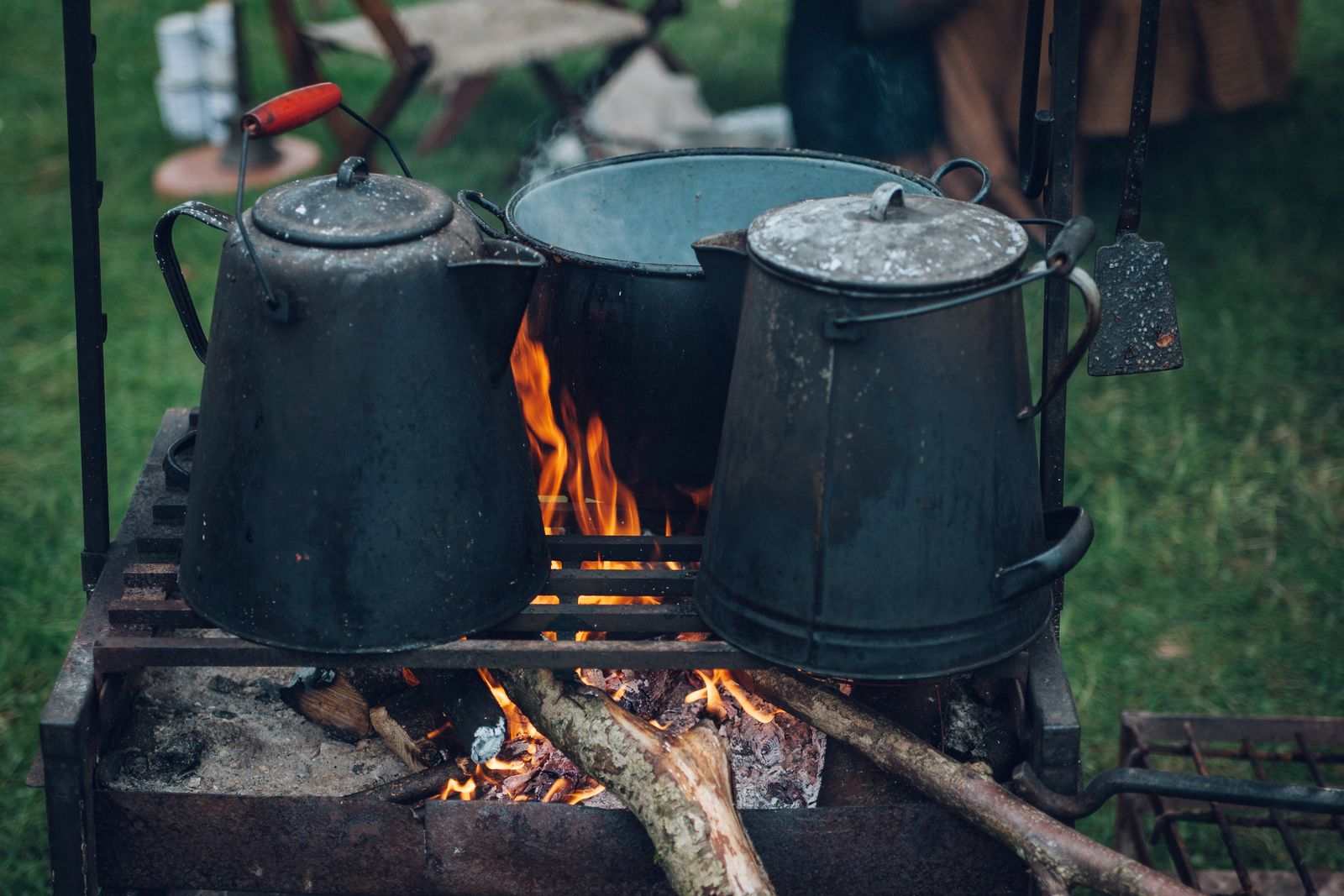
The stove that saves you in January cooks you in August. Farm families of the 1800s answered this with architecture: the summer kitchen, a detached or semi-detached building of 150 to 250 square feet with a big chimney, built across Pennsylvania German country, New England, and farm country generally. Cooking, canning, soap-making, and laundry moved out there for the hot months and back into the house for winter. The summer kitchen did not die because houses got better. It died because gas and electric stoves stopped heating the room.
The modern version is smaller: a porch or outdoor cooking station. One present-day household on the Forestry Forum described cooking heat that forced their window air conditioner to run for hours, until they built a porch summer kitchen, a purpose-built table for a bread machine, pressure cooker, and toaster oven. A month later the air conditioner ran a couple of late-afternoon hours on the hottest days, and that was all.
Solar cooking fits into the same section, honestly placed. A box cooker genuinely cooks, at roughly 200 to 300 degrees Fahrenheit: bread, stews, grains, all of it, given sun. Its limit is not temperature. It is timing. The food is ready at the hottest part of the day, not at suppertime, the output shrinks in the short, low-sun days of a northern winter, and a cloud that stays ends the day's cooking. Lytefire, which makes solar ovens for working bakers in France, says it plainly in its own FAQ: the solar oven is part of an energy mix, because when the cloud stays, the last batch gets baked with wood, gas, or electricity.
The bridge between the solar cooker and suppertime is an old device with no moving parts: the haybox. Bring the pot to a boil for ten or fifteen minutes, tuck it into insulation, a box of hay, blankets, a purpose-built Wonderbox, and walk away for three to six hours. Retained-heat cooking saves 20 to 80 percent of the fuel, the longest-cooking foods saving the most; the Solar Cooking Wiki's example is five pots of beans cooked for the fuel of one. Grains and beans also use about a quarter less water, because nothing boils away, and nothing can scorch. It has one sharp edge: food held warm for hours sits in the temperature range where bacteria thrive, so overnight holding is where haybox cooks go wrong. Cook it, hold it hot, eat it the same day.
Keeping food cold
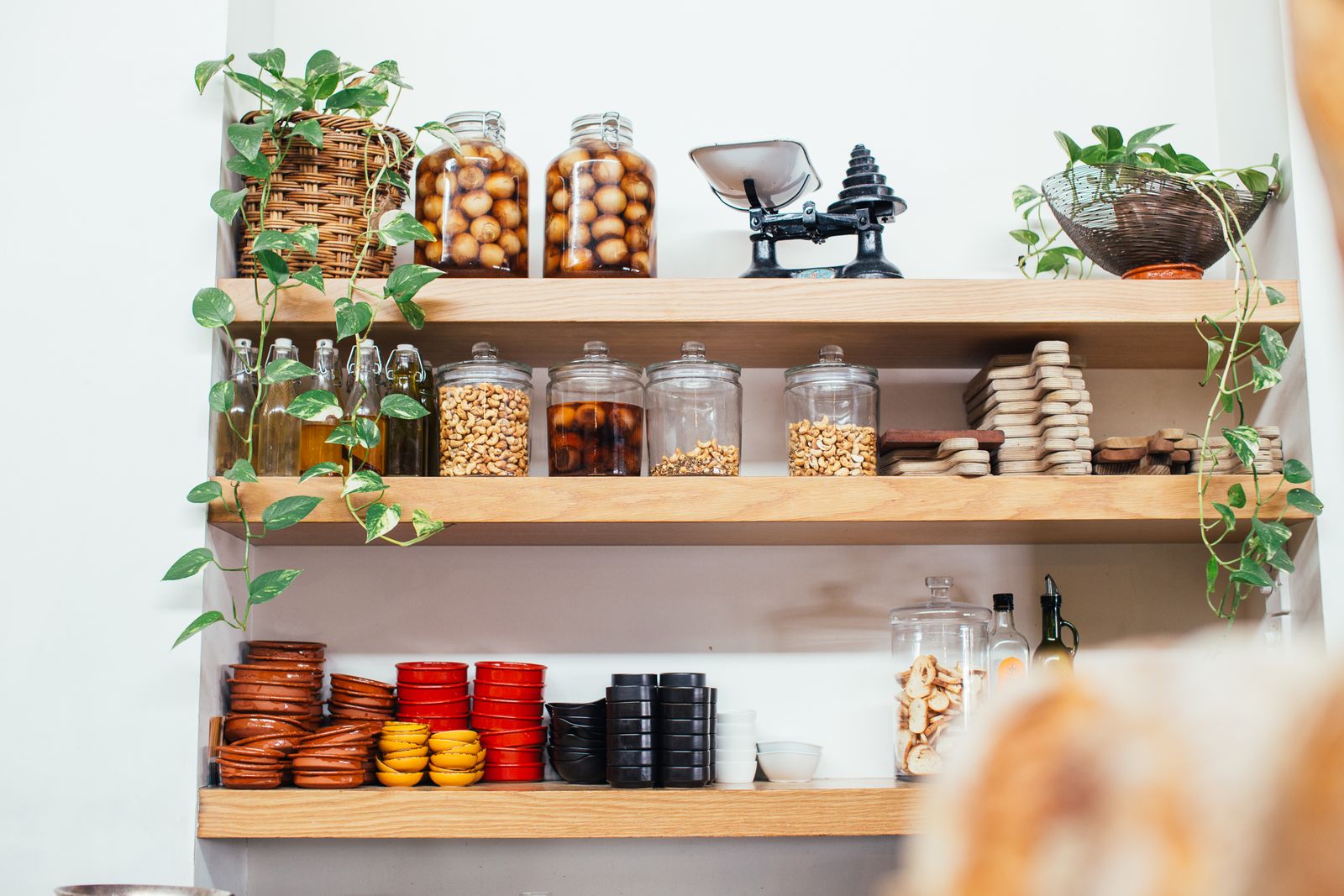
One rule runs this whole section, and it comes from a Canadian family of six who lived three years with no fridge or freezer at all: perishables belong at 40 degrees Fahrenheit (4 Celsius) or colder, and a thermometer makes the call, not habit or hope. Every cold-storage choice below is just a different way of holding that line.
The propane fridge is the commonest answer, and it is a real appliance with real numbers. A household-size unit — Unique's 10 cubic foot model, by its maker's spec sheet — burns about 1.4 pounds of propane a day, so a 20-pound bottle lasts roughly eleven to fourteen days, not a month. New, a family-size unit runs about $1,800 to $3,400. And it has two installation rules the brochures whisper. It must sit dead level: absorption cooling works by gravity flow, and a unit run well off level can block its own cooling tubes permanently, which is a replacement, not a repair, at close to four figures. And because it burns fuel around the clock, it needs proper venting and a carbon monoxide alarm in the same room. The alarm is part of the appliance.
That same Canadian family tells the other half of the story. Their first small propane fridge proved to be a dud. They paid $800 Canadian for a 3.3 cubic foot replacement, delivered up a long dirt road. When that one stopped working, they did not replace it: a proper fridge cost several thousand dollars and scarce room in an 800-square-foot cabin, and the propane truck often could not reach them on the bad road at all. They rebuilt the household's whole food routine around having no fridge. It worked because the routine, not the appliance, was doing the keeping.
The older cold spaces sort themselves out by temperature. A root cellar worked through the fall with cold night air can hold 32 to 40 degrees — cold enough for milk, and the reason cellars earned their reputation. A spring house holds 45 to 55 degrees, the temperature of the spring itself: a fine cool cupboard for butter, eggs, and produce, and not refrigeration, whatever the nostalgia says. The zeer pot, the clay pot-in-pot cooler, sits honestly between: in hot, dry air it is a real help for vegetables, with field trials in arid Burkina Faso averaging about an 8-degree Celsius cut, but in humid air the drop shrinks to a few degrees and the physics will not be argued with. Vegetables and ferments, yes. Meat and milk, never.
Washing up

Washing up is where the water budget shows. The basin method, one basin to wash and one to rinse, does a full evening's dishes in about 4 to 6 gallons. The same load under a running tap takes 15 to 30 gallons or more. Off the grid, that gap is not a line on a water bill. It is water somebody hauled in, and greywater somebody has to carry out, twice a day, every day. One honest sentence so the rest can be trusted: a full modern dishwasher uses about 3.5 gallons and beats the basins narrowly. Basin washing wins against the tap. The dishwasher is a machine this kitchen does not have.
The water going out needs a plan too. Kitchen sink water is the problem child of greywater: it carries grease and food scraps, many codes exclude it from greywater reuse entirely or class it as the higher-risk kind, and stored greywater turns septic within a day or two. Decide where the dish water goes before the sink is plumbed, not after the first summer of carrying buckets to a spot that has gone sour.

And under everything: water is heavy. It weighs 8.3 pounds a gallon. A family of four, at the practical planning minimum of 2 gallons a person a day for drinking, cooking, and basic washing, moves about 66 pounds of water every day, before laundry, before a garden. A single five-gallon container is 42 pounds before the weight of the container itself. So the last word on off-grid kitchen design is not about stoves or fridges at all. Put the work surface between the water source and the water's way out, shorten every carry, and design the whole room around the person who will still be carrying water in February. That person is the kitchen's real appliance, and the one that has to last.