
Solar Sizing Without the Guesswork: Loads, Batteries, and Winter Sun

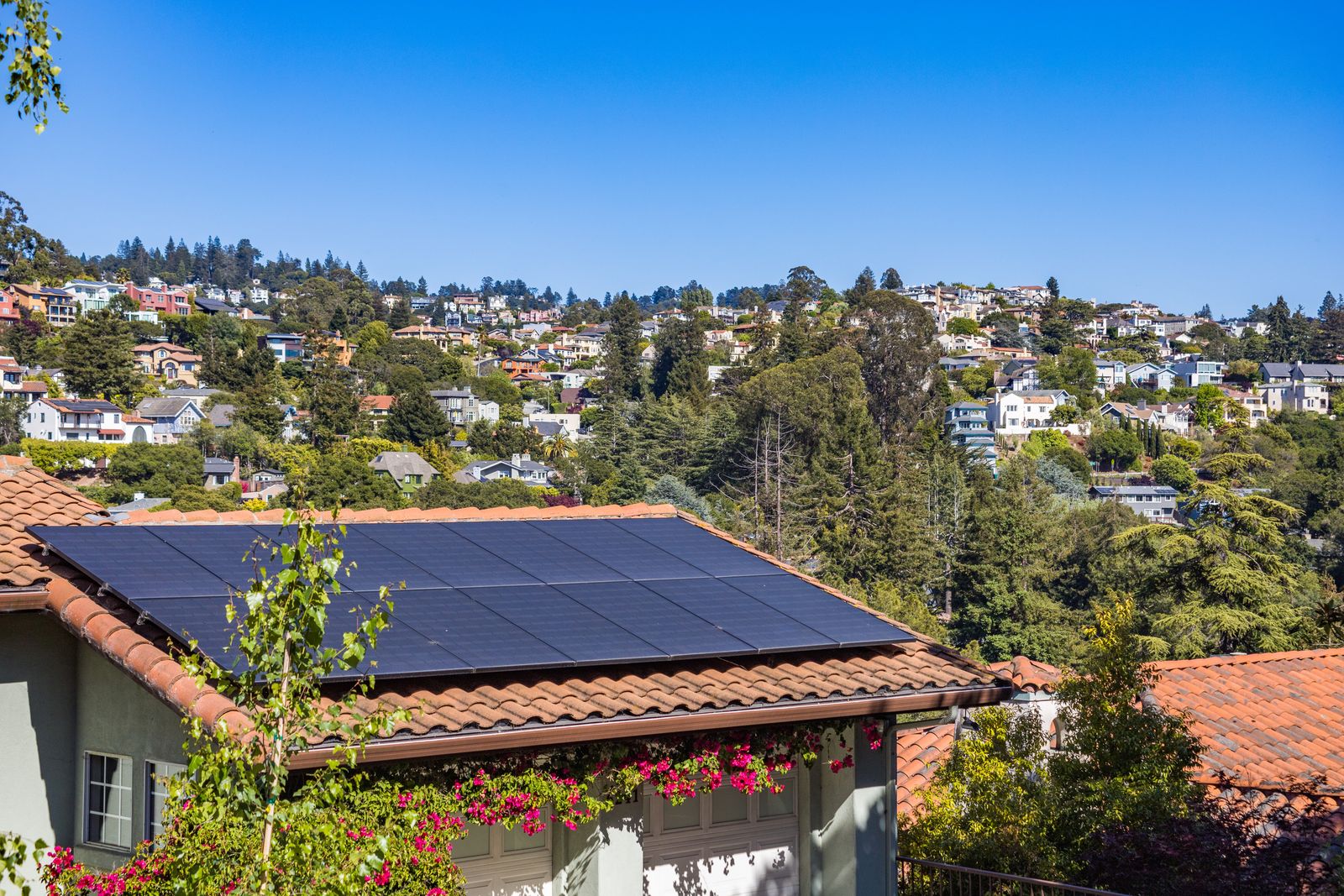
Photo by Robert So
An off-grid owner who sized his system by the book kept a diary of a December storm, and it reads like a tide going out. Day one ends with the battery bank at 91 percent. On day two the array replaces less than the fridge and the pump use, and the bank opens day three at 34 percent, under a sky he describes as "the colour of wet concrete." The same account admits the battery formula was wrong the first time he ran it, and that a man who had sworn against owning a generator ended up keeping one anyway. His system was not badly built. It was sized for the wrong month.
Sizing a solar system is arithmetic, not intuition, and the arithmetic has one rule above all others: design for December, or December will redesign it for you. This article works the whole method on one household, every step shown: the load audit, the sun hours, the array, the battery bank, the inverter, and the controller check that keeps a cold morning from destroying equipment. Prices and payback are a different article's ground; "Kill the Bills," earlier in this series, owns the money side. This one owns the numbers.
Step one: the load audit, measured, not guessed

Everything starts in watt-hours per day: watts multiplied by hours of use, summed over every load in the house. The trap load is the fridge. Its compressor cycles on and off, so a fridge is costed at its running watts times its effective run hours, never its watts times 24. Van-system builders at FarOutRide, who log real use, cost their fridge exactly that way, at a 35 percent duty cycle. Nameplate watts are a maximum, not a measurement, and the guides agree on the remedy: a plug meter, the Kill A Watt is the one they name, left on the suspect loads for a week before anything is sized.
Then come the loads nobody chose. Lawrence Berkeley National Laboratory's standby-power research puts the average home's always-on leak at roughly 50 watts, about 450 kilowatt-hours a year, some 5 percent of household electricity. Measured homes ranged from 14 to 169 watts. Off-grid, that average leak is not a footnote. Fifty watts around the clock is 1,200 watt-hours a day, the same as the entire fridge load in the example below, burned by clocks, chargers, and standby lights. A bigger "always-on" figure circulates, the NRDC's 164-watt average idle load, but it includes legitimate equipment like routers and should not be quoted as pure waste. The sized truth is bad enough at 50.
Step two: peak sun hours, the December number
A peak sun hour is one hour of sunlight at the standard test intensity of 1,000 watts per square metre. A place's daily figure by month is read from NREL's PVWatts tool or from published tables, and the only figure that sizes an off-grid system is the worst month's. Toronto, from Natural Resources Canada data: 1.8 peak sun hours a day in December, 5.9 in June. Minneapolis, from NREL's Solar Radiation Data Manual: 2.3 in December, 6.1 in June. Phoenix, presented honestly as a range across the NASA POWER and PVWatts datasets: about 4.5 to 4.9 in December, about 8.2 in June. Toronto loses about 70 percent of its sun hours between June and December. Minneapolis loses about 62 percent. Even the desert loses about 40. Any sizing done on June, or on the annual average, has the failure built in before the first panel is mounted.
Step three: the array, worked end to end
Here is the example household, a small cabin where heat, cooking, and hot water are not electric. The audit: an efficient fridge, 120 watts at 10 effective hours, 1,200 watt-hours a day. LED lighting, 50 watts for 6 hours, 300. A well pump, 750 watts for just under an hour, 600. Router and modem, 15 watts around the clock, 360. A laptop, 60 watts for 5 hours, 300. Phones, chargers, and the standby that survived the switched strips, 10 watts around the clock, 240. Total: 3,000 watt-hours a day.
The array formula is daily watt-hours, divided by the worst month's peak sun hours, divided again by a system efficiency of 0.75, the middle of the range the sizing guides use, standing in for controller, wiring, temperature, dirt, and inverter losses. For Toronto in December: 3,000 divided by 1.8 is 1,667 watts of perfect-world array; divided by 0.75, it is 2,222 watts. Round up to a buildable 2,400 watts, six 400-watt panels. Check that array in June: 2,400 times 5.9 times 0.75 is 10,620 watt-hours a day, three and a half times the load. Once the bank is full, the surplus has nowhere to go. That waste is not a design flaw. It is the price of December, and it is why summer behaviour tells you nothing about whether a system was sized honestly.
Now the two standard mistakes, priced in light. Sized for June, the same household gets 3,000 divided by 5.9 divided by 0.75, a 678-watt array, which in December yields 678 times 1.8 times 0.75: 915 watt-hours a day, about 31 percent of the load, a shortfall of more than 2,000 watt-hours every single December day. Sized for the annual average of 3.8, it gets 1,053 watts, yielding 1,421 watt-hours in December, about 47 percent of the load. Half a system, bought at full confidence.
Step four: batteries, where usable is the only number that counts
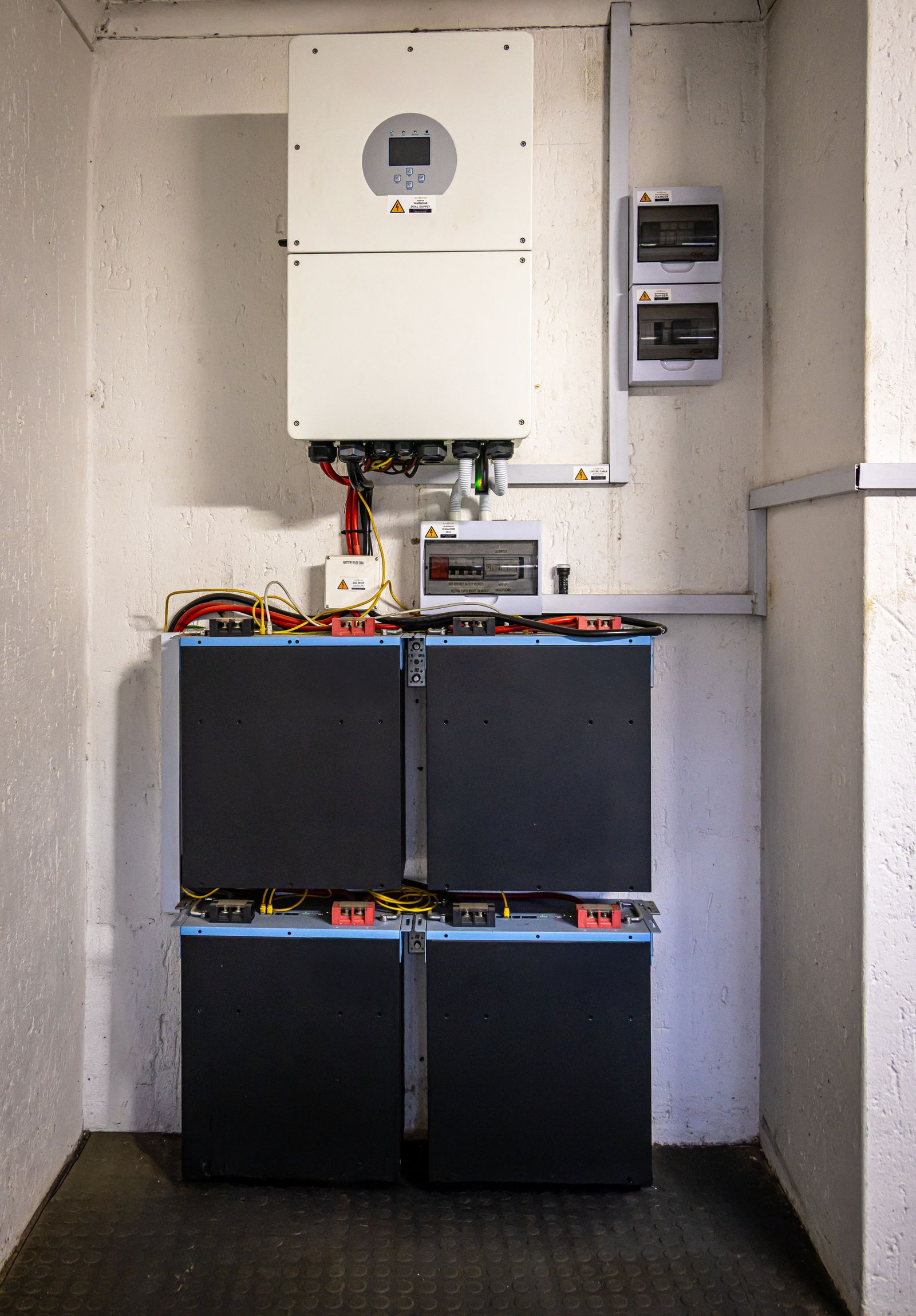
A battery bank is sized on usable capacity, and usable depends on chemistry. Flooded lead-acid: plan on half. Morningstar's technical guidance sets average depth of discharge at about 50 percent for the best balance of life and cost, and names the bank-killer in the same document: "the single most significant cause for premature battery failure is sulfation caused by chronic under-charging." A bank that never quite reaches a full charge grows hard sulfate crystals and loses capacity permanently, which is how an undersized array murders a bank slowly all winter instead of just going dark. Lithium iron phosphate: 80 to 90 percent usable, with 80 percent the rated-life specification from manufacturers such as Renogy and Battle Born, and one cold rule that overrides the brochure: a standard lithium bank must not be charged below 0 °C unless it has low-temperature protection.
Two days of autonomy for the example household means 6,000 usable watt-hours. In lithium at 80 percent, that is a 7,500 watt-hour nameplate bank. In lead-acid at 50 percent, it is 12,000 watt-hours on the invoice. Now stack the cold on top, because the two effects multiply. Trojan Battery's rule of thumb takes about 10 percent of capacity for every 15 °F below 80 °F; the planning figures that fall out of the manufacturer tables are roughly three-quarters of rated capacity at 0 °C and roughly half at −18 °C. The 12,000-watt-hour lead-acid bank at 0 °C holds about 9,000, of which half is usable: 4,500 watt-hours, a day and a half of autonomy, not the two days that were paid for. A discharged lead-acid battery can also freeze near the temperature of a cold night, while a fully charged one holds to about −50 °C, which is one more reason the state of charge is a winter survival figure and not a detail.
Step five: the inverter, sized for the worst second, not the average hour
Motors and compressors start hard. There is no single honest surge multiple: the sizing tables put typical fridge and pump startup at roughly 3 to 7 times running watts, a 150-watt fridge starting around 600 to 1,200 watts, a 750-watt well pump around 2,250 to 3,000, with older compressors reaching 8 to 10 times and modern inverter-compressor fridges starting under twice. Any source that prints one tidy number should not be trusted with the rest of the design.
For the example: everything running at once is 995 watts. The worst starting instant is the pump kicking on at 2,250 watts while the other 245 watts runs, about 2,495 watts momentary. The verdict: a 2,000-watt continuous, 4,000-watt surge pure-sine inverter is the floor, and 3,000 watts continuous is the comfortable pick. The failure mode is a known one; Anern's off-grid diagnostic guide describes the fridge or pump kicking on at night, the low bank sagging under the surge, voltage falling past the inverter's cutoff, and the system shutting down, a surge problem and a state-of-charge problem arriving in the same second. And the inverter itself goes on the load list: a mid-size unit idles at 10 to 40 watts doing nothing, which at 25 watts is 600 watt-hours a day, a fifth of this household's whole budget, spent on a box waiting for work.
Step six: the controller, and the cold-morning trap

One honest paragraph on controller types: a PWM controller clamps the panel to battery voltage and discards the surplus voltage, while an MPPT controller converts that surplus into extra charging current, a harvest advantage of roughly 15 to 30 percent that is largest in cold weather and with higher-voltage strings. On a northern system in December, that gap can be the whole margin, which is why the worked example assumes MPPT. The example's charge current is 2,400 watts divided by 48 volts, 50 amps, and with the standard safety factor, a 60-to-80-amp class controller.
The trap is voltage, and it springs on the coldest, brightest morning of the year. A panel's open-circuit voltage rises as temperature falls, at roughly a quarter to a third of a percent per degree. Take the example's panel, 37.0 volts open-circuit, a coefficient of −0.28 percent per degree, and a design morning of −20 °C, 45 degrees below the rating temperature. The cold voltage is 37.0 times 1.126: 41.7 volts a panel. Three in series is 125 volts, safe on a 150-volt controller. Four in series is 167 volts, over the limit, and the controller is destroyed before the sun is properly up. Owners on the DIY Solar Forum trade this story in a flat summary: "we have had many examples here of fried MPPTs where people have cut it too close, the temperature drops, and the magic smoke is released." Strings are sized to the coldest morning on record, never to the rating plate.
Snow: both halves of the truth

Snow costs about 3 percent of annual production. That figure is real: the Northern Alberta Institute of Technology's five-year Edmonton reference-array study measured it across tilts and winters, against an older industry assumption of about 20 percent, and found steeper tilts shedding their snow within one to three days. It is also, for this article's reader, dangerously incomplete. The 3 percent is an annual figure for arrays that bank summer surplus against winter loss. A fully covered panel produces about nothing while it is covered, the cover lands in the lowest-sun month of the year, and an off-grid December has no surplus to average against. Print either half alone and the reader is misinformed in opposite directions: snow is a rounding error on the year, and a genuine outage on the day.
The winter verdict: plan the generator hours

December arithmetic forces the conclusion the storm diary reached. Carrying a northern household through December on panels and batteries alone means an array three times the June size and a bank that idles half the summer, and it still fails in a three-day storm. Working northern systems size honestly for the middle: solid from spring through fall, close in early winter, and planned generator hours for the December gap, run in efficient blocks that also drive the bank to the full charge the sulfation warning demands. The generator is not an apology for the solar system. It is a sized component of it, and what it costs to buy and feed is the money question "Kill the Bills" takes up elsewhere in this series.
The storm-diary owner ends his account with the generator he swore he would never own, and by then it reads less like defeat than like the final line of the load audit. Sizing without guesswork is mostly the discipline of refusing the flattering number: the June sun hour, the nameplate watt, the battery's full capacity, the panel voltage on a mild day. Every one of those numbers is true somewhere. A system is what happens when they are all true at once, in December, at −20, with the pump starting. Size for that morning, and the rest of the year takes care of itself.