
Chickens Done Right: Coops, Feed Costs, and Winter Care


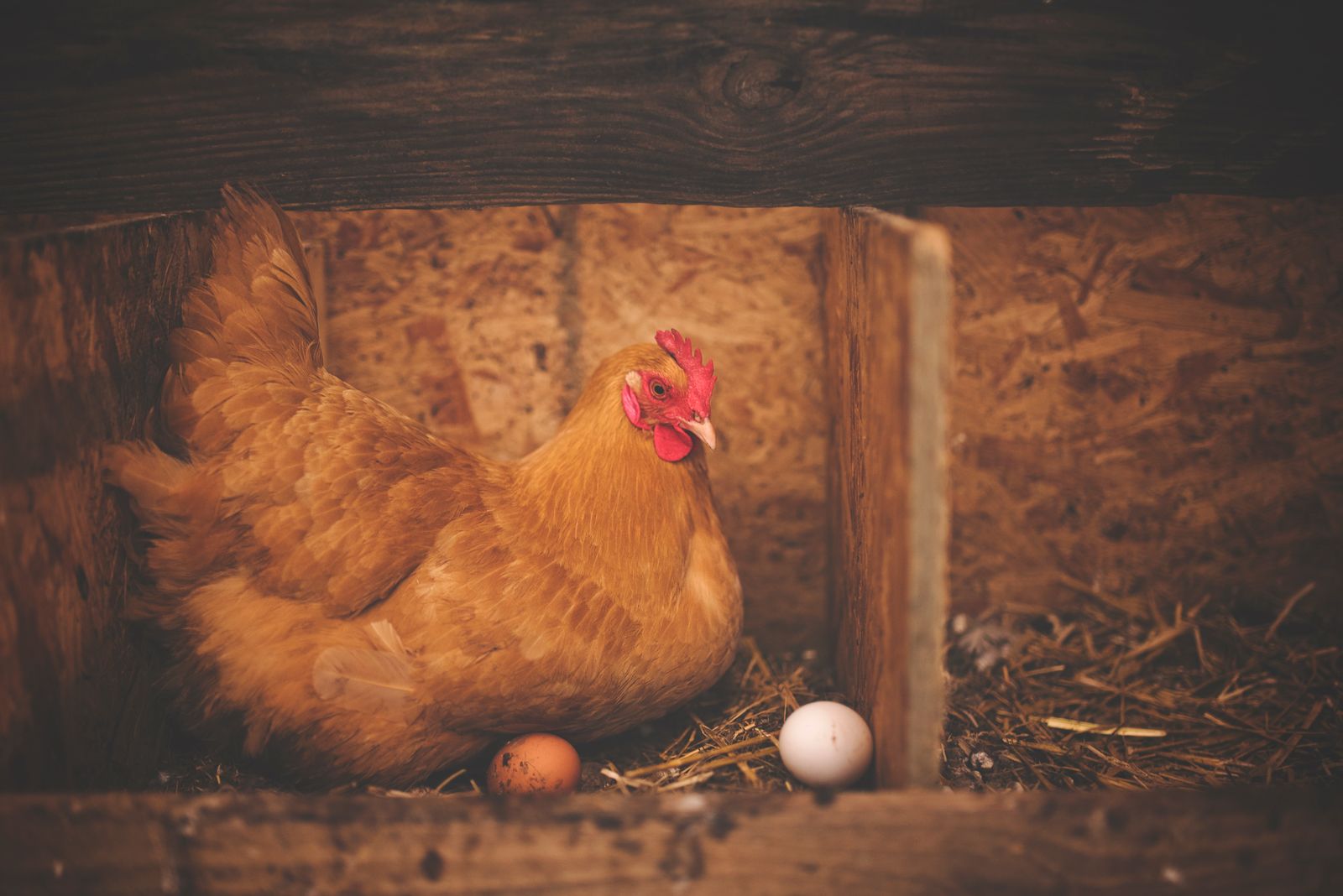
Photo by Ivan Babydov
The keeper told the story against himself on the Backyard Chickens forum. A raccoon tore loose the chicken wire he had nailed under the eave, killed all three of his hens in one night, and left through a gap two and a half inches wide. The replies were not sympathetic about the wire. They were unanimous: chicken wire is not predator protection. It never was. It is a fence for keeping chickens where you put them, and it tears like cloth under a raccoon that has decided to come through it.
That one mistake, made by thousands of new keepers in good faith, is the whole subject of this article in miniature. Keeping chickens well is not complicated, but it is exact. The numbers are knowable: how much room, how much feed, what a dozen eggs truly costs, what winter actually does to a bird. The failures are just as knowable, and they repeat so faithfully in keeper forums that they read like a checklist. This article works through both lists.
Room to live in: the 4-and-10 rule, and what minimum means

The rule every keeper hears is 4 square feet per bird inside the coop and 10 in the run. It is a good rule. Build to it. But know where it comes from, because it is a recommendation, not the legal floor of bird welfare. Penn State Extension's small-scale poultry housing table gives minimums well below it: 1.5 square feet inside and 8 in the run for a laying hen, with roost space at 6 inches per bird and nest boxes at two for the first four hens, then one for every four more, each at least 12 by 12 inches. The multi-university eXtension guidance recommends 3 to 4 square feet indoors and 10 outdoors, which is where the folk rule gets its authority.
The minimums assume the birds are outside most of the day. A flock that winters indoors for weeks, in a climate where the run is snow, lives at the generous end of the range or starts pulling feathers out of each other. Space is behaviour management bought in advance: most pecking, bullying, and filth problems in small coops are square-footage problems wearing a disguise.
Predator-proofing: build for the raccoon, not the hen

The standard that works is half-inch hardware cloth, 19 gauge, fastened with screws and washers rather than staples, which pull out. Quarter-inch goes where weasels and snakes are the local threat. The ground line matters as much as the walls: a buried apron 12 to 18 inches down, or a 12-to-24-inch horizontal skirt of mesh pinned at ground level, stops the diggers; Cornell Cooperative Extension recommends burying run fence at least six inches. The run gets a covered top, because hawks and climbing raccoons both arrive from above. And the latch is a predator decision too. Raccoons open slide bolts and hook-and-eye latches with their hands, because they effectively have hands. A barrel bolt backed by a carabiner, or a padlock, is the fix keepers land on after the fact.
The forum record is grim and consistent. One keeper lost birds when a raccoon entered through the sewn seams of a 2-inch chicken-wire pen roof, and rebuilt the top in half-inch hardware cloth. A first-person account at Simply Restored describes 19 chickens killed in one night through a rafter opening, and, in a separate incident, a raccoon reaching through tractor wire and tearing the leg off a live bird inside, fixed with an offset second layer bringing the openings to half an inch or less. Every one of those coops looked secure to its builder. Predator-proofing is the discipline of looking at your own coop the way the raccoon will.
Starting out: chicks, pullets, and the first bill

The cheap bird is the day-old chick, and she is cheap because the work is yours. An itemised first-year budget built from extension data by HenAcre puts sexed pullet chicks at $4 to $8 each, a brooder phase at $75 to $160 for eight chicks with a heat plate at $40 to $70, and started pullets, young hens near laying age, at $25 to $45 each for anyone who would rather skip the brooder weeks. The same budget totals the whole first year for six hens at $680 to $1,610, with the coop and run doing the damage: prefab at $500 to $1,200, do-it-yourself at $200 to $600, a custom walk-in build at $1,500 and up. Wider keeper sources converge on $500 to $3,000 for year one with four to six hens, and $200 to $600 a year after that. There is no honest single figure. There is a range, and where a household lands in it is decided mostly by the coop.
Feed math: the numbers nobody prints on the bag

A laying hen eats about a quarter pound of feed a day, roughly 90 pounds a year; a University of Florida extension text gives 0.20 to 0.25 pounds a day, 84 to 96 pounds across a laying year. In cold weather, intake rises by as much as 25 percent, per University of Minnesota Extension, because the bird is fuelling herself against the cold before she makes an egg. At a fair expectation of about 250 eggs in a good layer's prime year, that feed works out to about 4.4 pounds behind every dozen eggs. Commercial strains produce a dozen on under 3 pounds of feed, according to the USDA APHIS Poultry Industry Manual, but those are confinement birds on precision rations. Quoting their conversion for a backyard flock is a lie by citation.
Expectation is the other half of feed math. A good backyard layer gives about 250 eggs in her prime year, high-production hybrids reach 280 to 320, standard breeds run 220 to 260, and production falls by roughly a fifth to a quarter in year two. "An egg a day" is a slogan, not a plan. Plan the feed bill on 250, and let a better year be a pleasant surprise.
What a dozen eggs actually costs
Here is the arithmetic the feed-store poster never shows. One keeper-focused costing works a six-hen flock honestly: $800 all-in setup, $180 a year in feed, about 108 dozen eggs a year. Year one lands near $9 a dozen. Averaged over five years, about $3.15 a dozen. Feed alone, once the coop is paid off, about $1.65 a dozen, against a US store average of $2.19 a dozen in the Bureau of Labor Statistics series for mid-2026. A keeper's own published tally lands in the same country: Rebekah Pierce costed six hens at about $242 a year in feed, roughly $400 all-in, producing about 88 dozen eggs worth $264 at $3 a dozen. Losing money before labour, and she keeps them anyway, which tells you what the eggs are actually for.
One Backyard Chickens keeper watched the feed bill climb from $20 a month to $60, 300 pounds a month for 23 birds, with the nutritionally correct feed priced at double that again, and wrote the sentence that sums up the thread: keeping chickens was "more costly than I ever expected." The conclusion is not "don't keep chickens." It is that backyard eggs pay back slowly, and only if the coop was cheap. Anyone selling chickens as a grocery-saving scheme is skipping year one.
Winter: the enemy is damp, not cold

University of Minnesota Extension states the winter rule in one sentence: "The main causes of frostbite are high moisture and cold temperatures." Chicken manure is about 70 percent water, so a sealed coop humidifies itself from inside. The keeper who confessed on the forum had it exactly backwards and said so: "I closed the coop up because I got nervous they would be too cold. That is when they got the frostbite. This second round, I left the vent open." Another keeper's birds frostbit at 24 to 34 °F in a small coop, temperatures other keepers' birds handle routinely, and the experienced replies were unanimous that the diagnosis was ventilation, not heat.
Ventilation is not a draft. Air exchange belongs high, above the roosts, where moist air leaves without wind crossing the birds. The gauges are free: an ammonia smell, or condensation on the windows, means open the vents further. On heat, this article prints a split decision because that is what the sources hold. Minnesota Extension advises supplemental heat when coop temperatures fall below 35 °F, radiant sources preferred, with explicit heat-lamp fire warnings. New Hampshire, Maine, and Maryland extension positions run the other way: healthy adult birds in a dry, draft-free coop need no supplemental heat, and adding it adds fire risk. Both are extension. Climate and coop decide, and anyone who quotes one side as settled is selling something.
Water is the real winter chore. One keeper with a coop 100 feet from the house hauled fresh water twice a day at −10 to −20 °F. The no-power routine is rotating two waterers, or black rubber pans that can be stomped free of ice. Heated waterers and bases draw about 40 to 150 watts and cycle on thermostats, so the running draw is well under the nameplate; check the temperature rating before buying, because most heated bases are only rated to about 10 °F, while a few, Premier1's nipple waterer among them, are rated to −20 °F. Light is the last winter lever. Hens lay best at about 14 hours of light; if light is added, it goes on in the morning, never cut off at night, which strands birds on the floor in the dark. The other side deserves its sentence too: the dark months are the bird's natural rest, tied to recovery and lifetime laying, and a keeper tally in this research runs no light at all and takes almost no eggs from November to February as the honest price of that choice.
Deep litter and the two mite wars
Deep litter is a 4-to-6-inch bed of straw or shavings, stirred and topped up, cleaned out in spring. Minnesota Extension offers it for insulation and moisture buffering, with "some natural heat as the manure decomposes." Print that modestly: a few degrees of help and a dry floor, not a furnace. Wet litter is the failure mode; the Merck Veterinary Manual puts the target near 20 to 25 percent moisture, and wet litter drives footpad damage and eye and respiratory harm. Georgia Extension warns that lime raises litter pH and can increase ammonia release, so lime is not the shortcut it is sold as. And the method fails outright in small, humid coops, which loops back to the ventilation rule: litter manages moisture only when the air above it is moving.
Mites are two different wars and keepers lose both by fighting one. Northern fowl mite lives on the bird, clustered at the vent. Poultry red mite hides in roost cracks by day and feeds at night, and can survive in an empty coop for most of a year, which is why treating only the birds re-infests within weeks. First signs are behavioural: hens reluctant to go into the coop at night, pale combs, a drop in lay. A white paper towel wiped under the roost at night and coming back blood-streaked is the field test. Birds and coop get treated together, or the calendar just starts over.
The rooster is the bylaw fight
Hens lay without a rooster. He is not needed for eggs, and he is the single most common reason a legal flock becomes a legal problem. The forum record includes a keeper summonsed after neighbours complained about a bantam rooster kept in a garage dog house until after 8 in the morning, and a health department visit over a 2-pound cockerel blamed for a neighbour's migraines. The common ordinance shape, Hot Springs, South Dakota's code among them, caps hens, six in that code, bans roosters outright, and ends the permission after three substantiated violations. Read the bylaw before the hatchery catalogue. The flock that fits the rules is the flock that gets to stay.
Done right, chickens are the most forgiving livestock a household can keep, and the least forgiving of the three mistakes this article opened with: wire that only looks like protection, a coop sealed against the wrong enemy, and eggs costed on a slogan. The keeper who lost his three hens rebuilt with hardware cloth. The keeper who frostbit her birds left the vent open the second winter. The knowledge is all published, most of it free from the extension services, and the birds themselves are honest accountants. They lay in proportion to what they are given, no more and no less, and a flock kept on real numbers will tell its keeper the truth every morning in the nest box.